
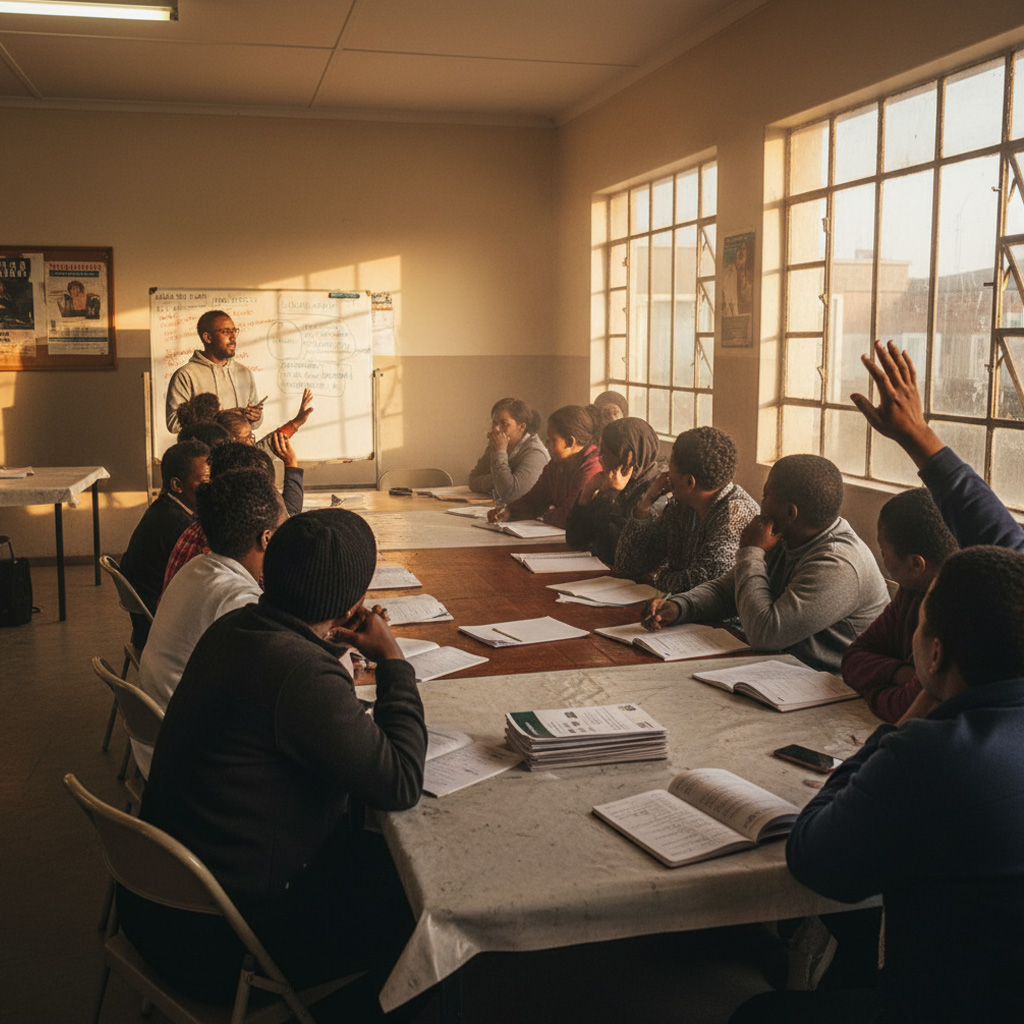
When most people think about the global response to HIV/AIDS, they picture government health agencies, nonprofit organizations, and community activists. Rarely do multinational corporations come to mind as key players in the fight against the epidemic. Yet Pangaea Global AIDS Foundation recognized early on that some of the world’s largest employers could become powerful partners in preventing HIV transmission and ensuring access to treatment—if approached strategically and with a commitment to comprehensive, evidence-based programming.
The Business Case Meets the Human Case
By the early 2000s, forward-thinking corporations were beginning to recognize that HIV/AIDS wasn’t just a public health crisis—it was a workforce crisis. Companies operating in high-prevalence regions faced devastating impacts: skilled workers falling ill and dying in their prime, productivity losses, increased healthcare costs, and the burden of training replacements for experienced employees. In some African countries, corporations were losing significant portions of their workforce to AIDS-related illnesses.
But Pangaea understood that sustainable corporate engagement required more than just fear-based motivation. The foundation worked with companies that had genuine social responsibility commitments—organizations that recognized their duty to protect employee health and wellbeing as a fundamental value, not merely a business imperative.
This alignment of business sustainability with human dignity created a foundation for partnerships that went far beyond token gestures or public relations exercises. Pangaea helped corporations develop workplace programs that were comprehensive, evidence-informed, and genuinely beneficial to employees and their families.
What Comprehensive Really Meant
The workplace HIV programs Pangaea helped design weren’t limited to distributing condoms or offering a single educational session. They were holistic approaches addressing prevention, testing, treatment, and care—along with the co-infections and related health challenges that often accompanied HIV.
Programs typically included education and prevention services that were culturally appropriate and addressed the specific contexts and risk factors relevant to different workforce populations. Confidential voluntary counseling and testing removed one of the most significant barriers to knowing one’s status—fear of stigma and discrimination. Critically, companies committed to non-discrimination policies, ensuring that employees living with HIV wouldn’t face termination or demotion based on their status.
Treatment access was often the cornerstone of these programs. Companies with operations in resource-limited settings like Coca-Cola Company sometimes provided antiretroviral therapy that employees couldn’t otherwise afford or access. This wasn’t charity—it was an investment in keeping skilled workers healthy and productive. But the human impact was profound: people who expected to die within years instead had hope for long, healthy lives.
Pangaea also pushed companies to address tuberculosis and hepatitis B and C—infections that frequently co-occurred with HIV and required integrated approaches to screening, prevention, and treatment. This comprehensive view reflected the foundation’s broader philosophy: you couldn’t effectively address HIV in isolation from other health challenges affecting the same populations.
Navigating Complex Terrain
Implementing workplace HIV programs across multiple countries and diverse regulatory environments presented enormous challenges. What worked in corporate headquarters in New York or London often needed significant adaptation for factories in Vietnam, mines in South Africa, or office parks in India.
Pangaea’s expertise in implementation science and policy adaptation proved invaluable here. The foundation helped corporations navigate varying national regulations around HIV testing, treatment, and workplace health. They provided guidance on culturally appropriate education and counseling approaches that would resonate with employees from diverse backgrounds. They helped companies develop metrics and monitoring systems to track program effectiveness and identify gaps in coverage or quality.
Privacy and confidentiality were particularly complex issues. Employees needed assurance that seeking testing or treatment wouldn’t become known to managers or colleagues who might discriminate. Pangaea helped companies establish systems that protected health information while still allowing for program evaluation and improvement.
Beyond the Workplace Gates
One of Pangaea’s important contributions was pushing corporations to think beyond their direct employees. Many workers in high-prevalence regions had families affected by HIV—children orphaned by AIDS, spouses needing treatment, dependents requiring care. Some companies extended services to employees’ families, recognizing that supporting the household was essential to supporting the worker.
There was also the broader community impact. Large employers in resource-limited settings often had significant influence and could help strengthen local health systems. Some companies supported community health facilities, trained healthcare workers, or funded HIV services that benefited not just employees but surrounding communities. This approach aligned with Pangaea’s philosophy of building sustainable local capacity rather than creating isolated corporate enclaves of care.
The Ripple Effects of Corporate Leadership
When major multinational corporations implemented comprehensive HIV programs, the effects rippled outward in unexpected ways. These companies demonstrated that workplace HIV services were feasible and valuable, encouraging other employers to follow suit. They helped normalize conversations about HIV in workplace settings, chipping away at stigma that kept people from seeking testing and treatment.
Corporate programs also provided real-world implementation data. As companies tracked program uptake, treatment adherence, and health outcomes, they generated evidence about what worked in occupational health settings. Pangaea helped ensure this learning was shared across the field, contributing to broader knowledge about effective HIV program design.
Perhaps most significantly, corporate commitment to comprehensive HIV services created pressure on governments to strengthen their own public health responses. When employees of multinational corporations had access to quality testing, counseling, and treatment, it highlighted the inadequacy of services available to the general population. This created both political pressure and practical examples that could inform national program design.
Challenges and Limitations
Pangaea was realistic about the limitations of the corporate partnership model. Not all companies were willing to make the substantial investment required for comprehensive programs. Some offered minimal interventions that checked a corporate social responsibility box without meaningfully addressing employee needs. There was always the risk that programs would be scaled back or eliminated during economic downturns or leadership changes.
There were also equity concerns. Employees of multinational corporations often had access to HIV services far superior to what was available to the general population in the same communities. While this was beneficial for those employees, it highlighted broader inequities in healthcare access. Pangaea worked to address this by encouraging companies to support community health systems, but the fundamental tension remained.
Additionally, workplace programs couldn’t address all the social and structural factors driving HIV transmission—poverty, gender inequality, criminalization of marginalized populations. Corporate initiatives were one piece of a much larger puzzle that required government action, policy change, and community mobilization.
A Model for Global Health Partnerships
Despite these limitations, Pangaea’s work with multinational corporations demonstrated something important: the private sector could be a genuine partner in addressing global health challenges when approached strategically and held to high standards. The foundation showed that corporate engagement didn’t require compromising on program quality or comprehensiveness. Companies with authentic social responsibility commitments could implement evidence-based interventions that made real differences in employees’ lives.
This model has implications beyond HIV. As corporations increasingly recognize their role in addressing employee health and wellbeing globally, the principles Pangaea established—comprehensiveness, evidence-based design, cultural adaptation, privacy protection, family and community consideration—remain relevant for addressing other health priorities from mental health to non-communicable diseases to emerging infectious threats.
The foundation’s corporate partnership work reflected its broader philosophy: solutions to global health challenges require multiple sectors working together, each contributing their unique capabilities and resources. Governments, nonprofits, communities, and corporations all had roles to play. Pangaea’s contribution was helping navigate the complex terrain where these different sectors intersected, ensuring that collaborations served the ultimate goal of improving health and wellbeing for people most affected by HIV.
As we document Pangaea’s legacy, this often-overlooked aspect of the foundation’s work deserves recognition. By bringing multinational corporations into the fight against AIDS as genuine partners committed to comprehensive, evidence-based workplace programs, Pangaea demonstrated that the boundaries of who could contribute to global health were broader than traditionally imagined—and that expanding those boundaries could save lives.